PROJECT
OMEGA
A first-person sci-fi action game set inside a crumbling reactor complex overrun by mutated enemies. Developed at Game Lane Studios using Unreal Engine 5 — featuring custom characters, a projectile combat system, and full Blueprint implementation.
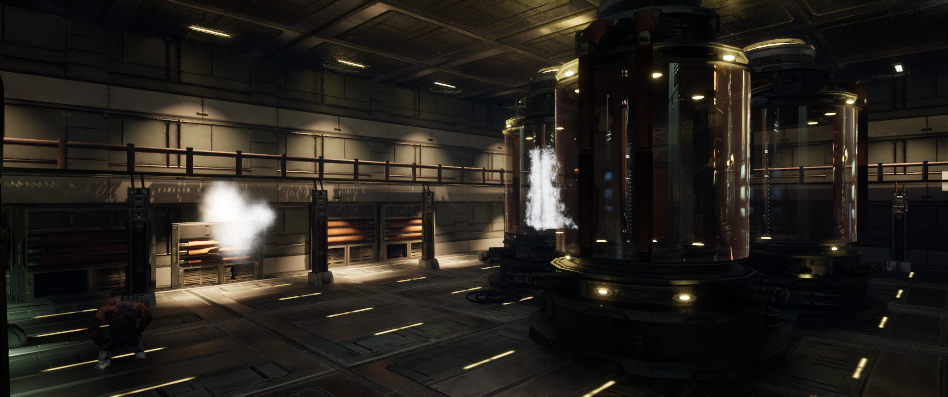
Unreal Engine 5 — Reactor Interior
About the Game
Project Omega drops the player inside a containment facility overrun by mutated subjects. The core loop revolves around exploration, enemy encounters, and a projectile-based combat system — all built using Unreal Engine 5 Blueprints.
Pipeline
Grey Boxing
Basic boundaries and structural layout blocked out to define spatial flow before any art pass.
Interior Build
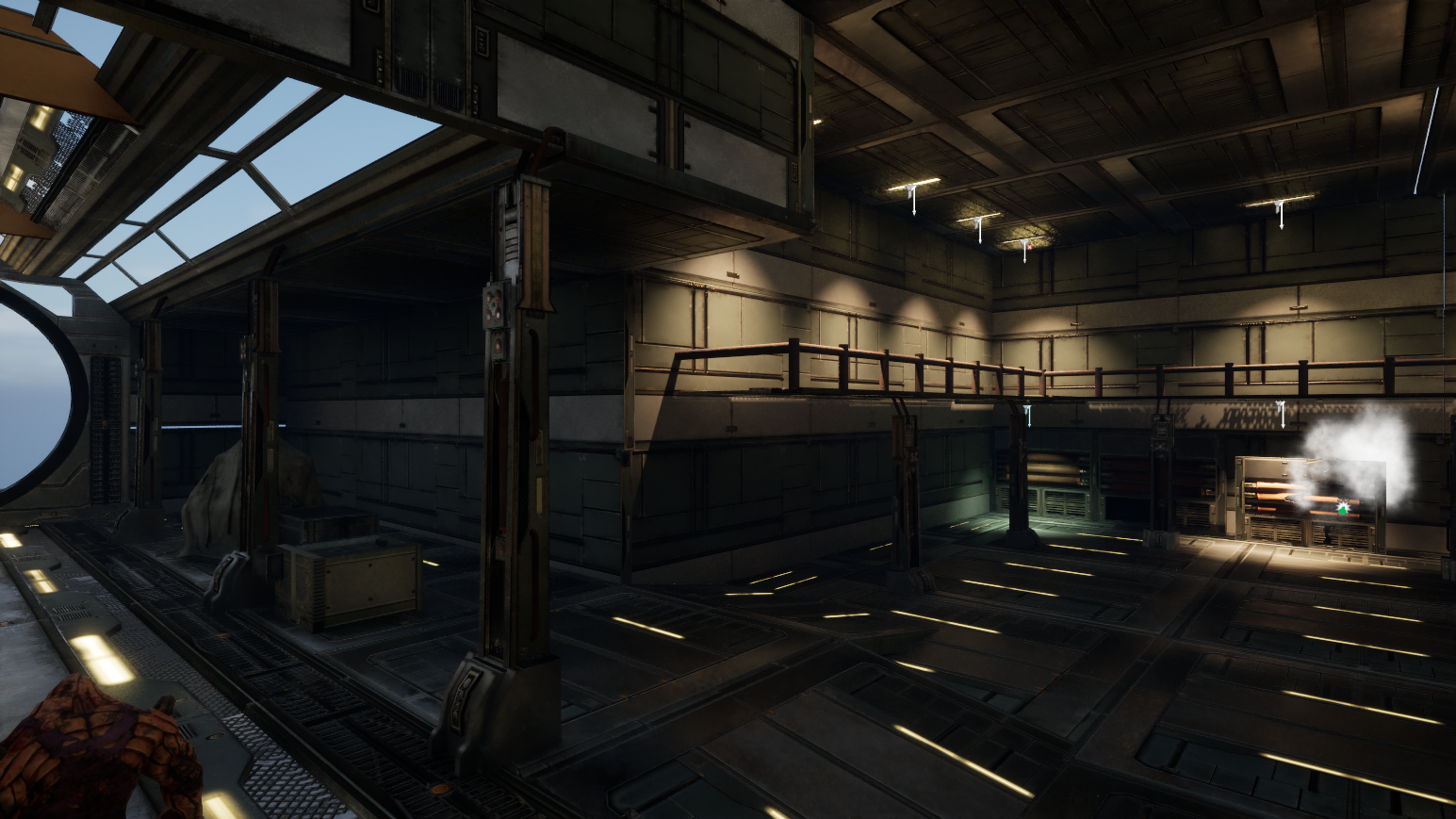
Reactor flooring, metal paneling, containment units, and atmospheric interior lighting.
Exterior & Surround
External environment, textures on the facility exterior, and atmospheric exterior lighting.
Colour Grading
Post-process colour grading to create the dark, industrial sci-fi tone throughout the level.
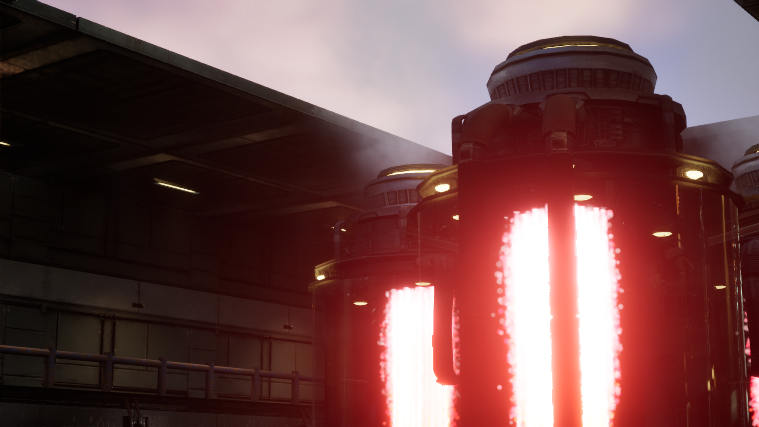
The reactor core — the central set-piece of the level with its intense red vertical beam.
The reactor room — multiple glass containment cylinders with atmospheric steam (interior final pass).
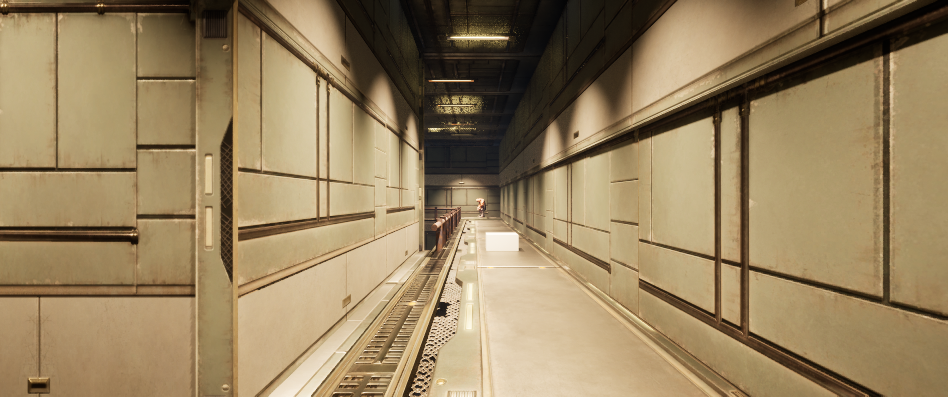
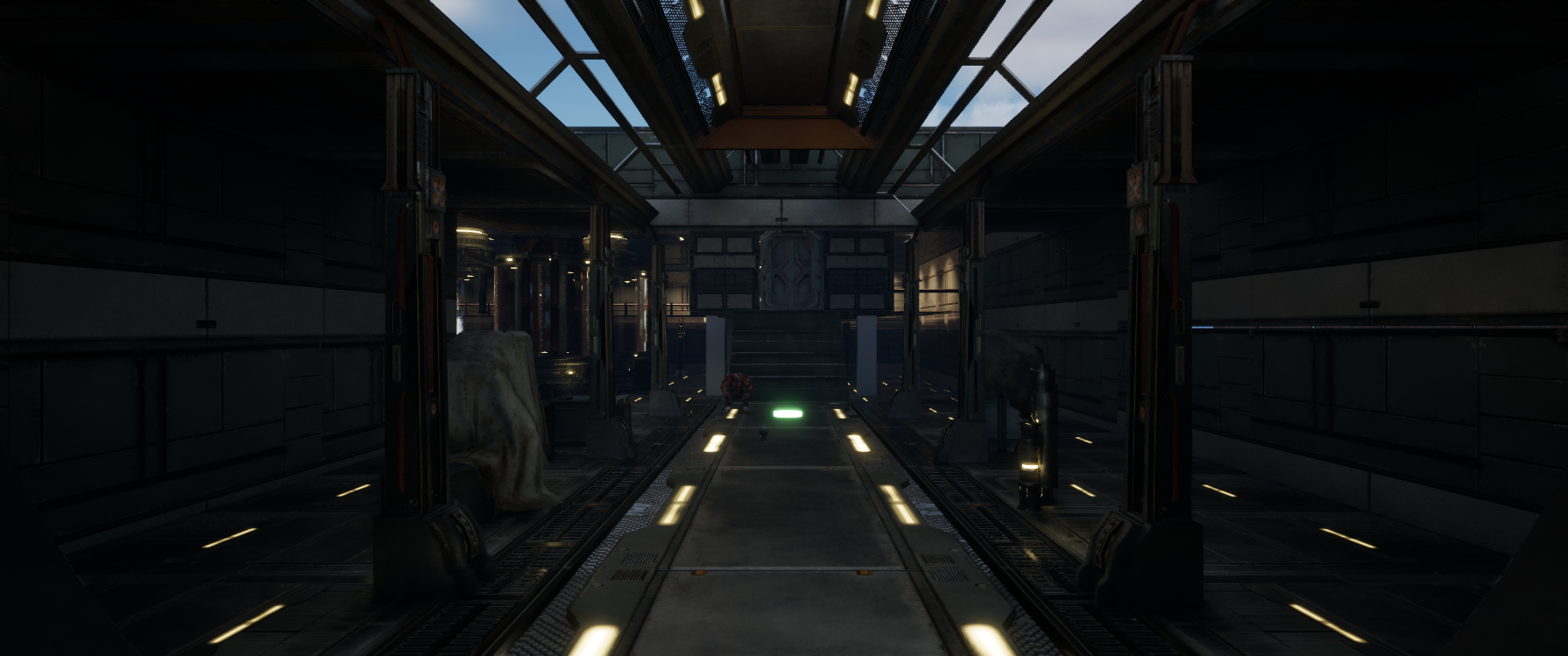
Approach corridor
Hangar bay interior
Enemy character with idle animation — posed and rigged in Unreal Engine 5.
Enemy Design
The enemy is a heavily mutated humanoid — stony, cracked skin with glowing red eyes, suggesting exposure to the reactor core. Their idle animation establishes weight and menace while keeping a readable silhouette for moment-to-moment gameplay.
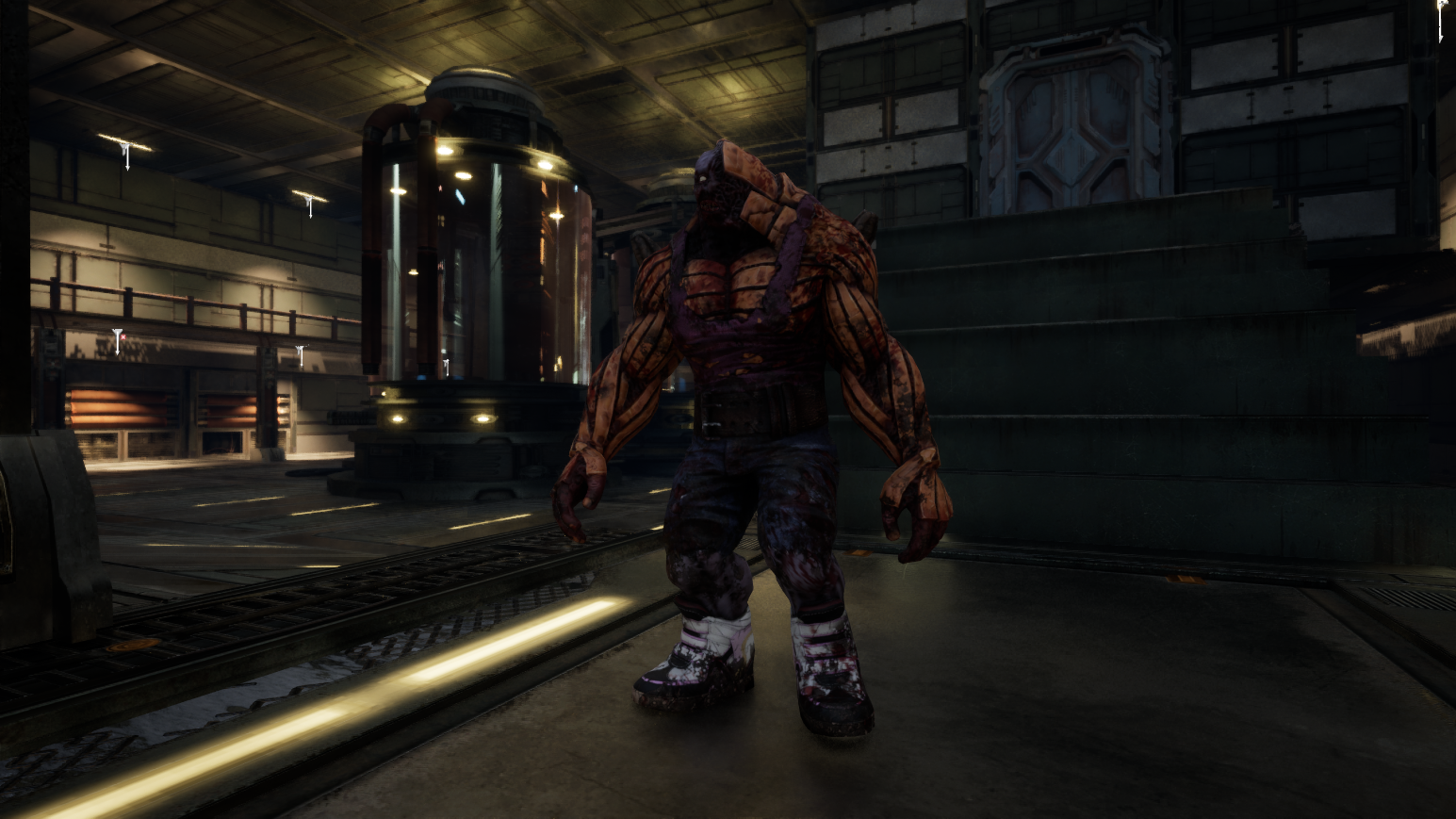
In-level placement
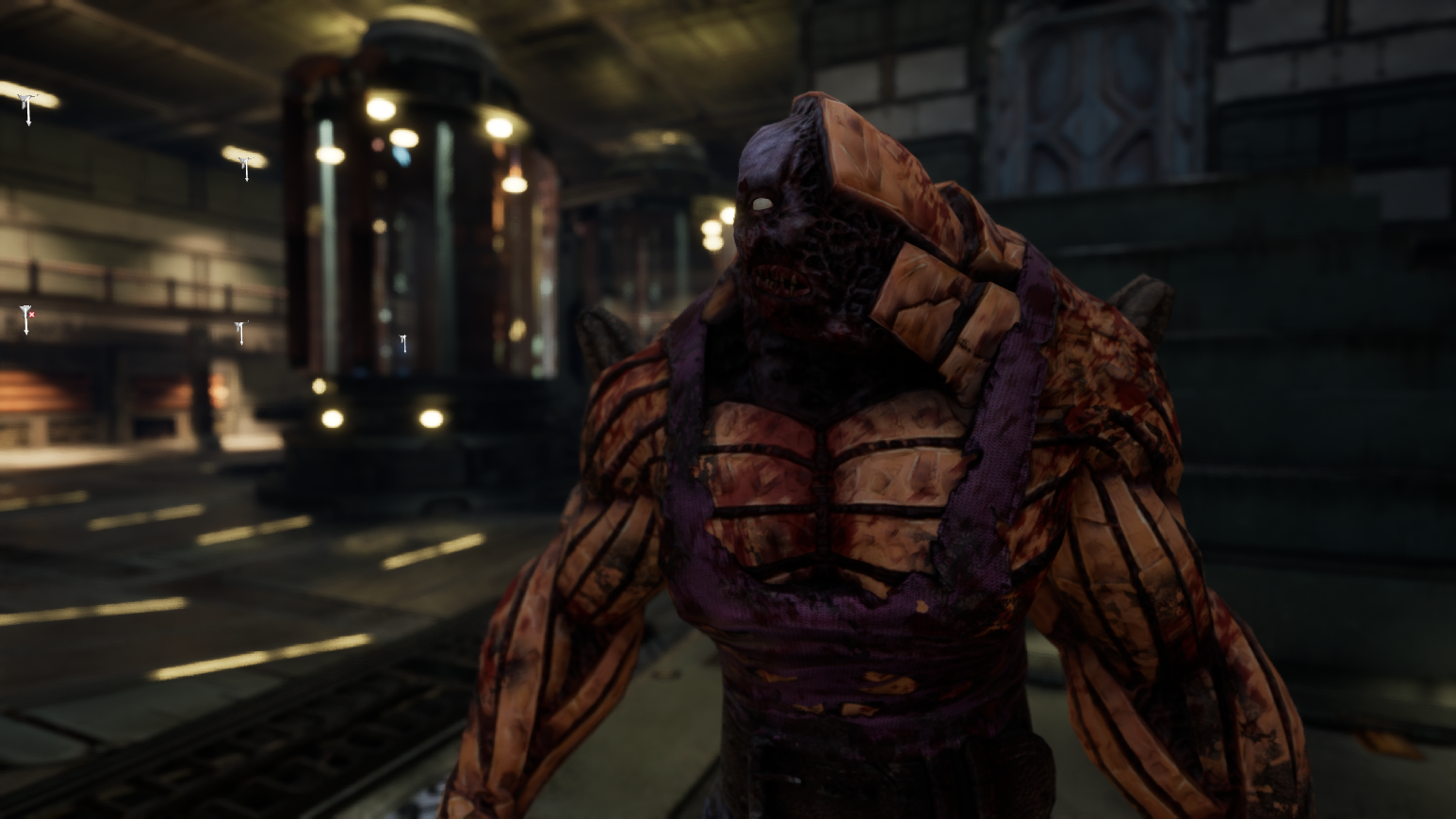
Character closeup
Player Character
The main character is set up with an idle animation and a full Blueprint implementation including Enhanced Input Mapping, movement, and the projectile-based combat system. The Animation Blueprint drives transitions between idle, move, and attack states.
Controls
Blueprint-First Development
The entire game logic is implemented using Unreal Engine 5's visual scripting system. Four core Blueprints power the game: an Animation Blueprint for character states, Collision and Projectile Blueprints for combat, and an Enhanced Input Blueprint for player controls.
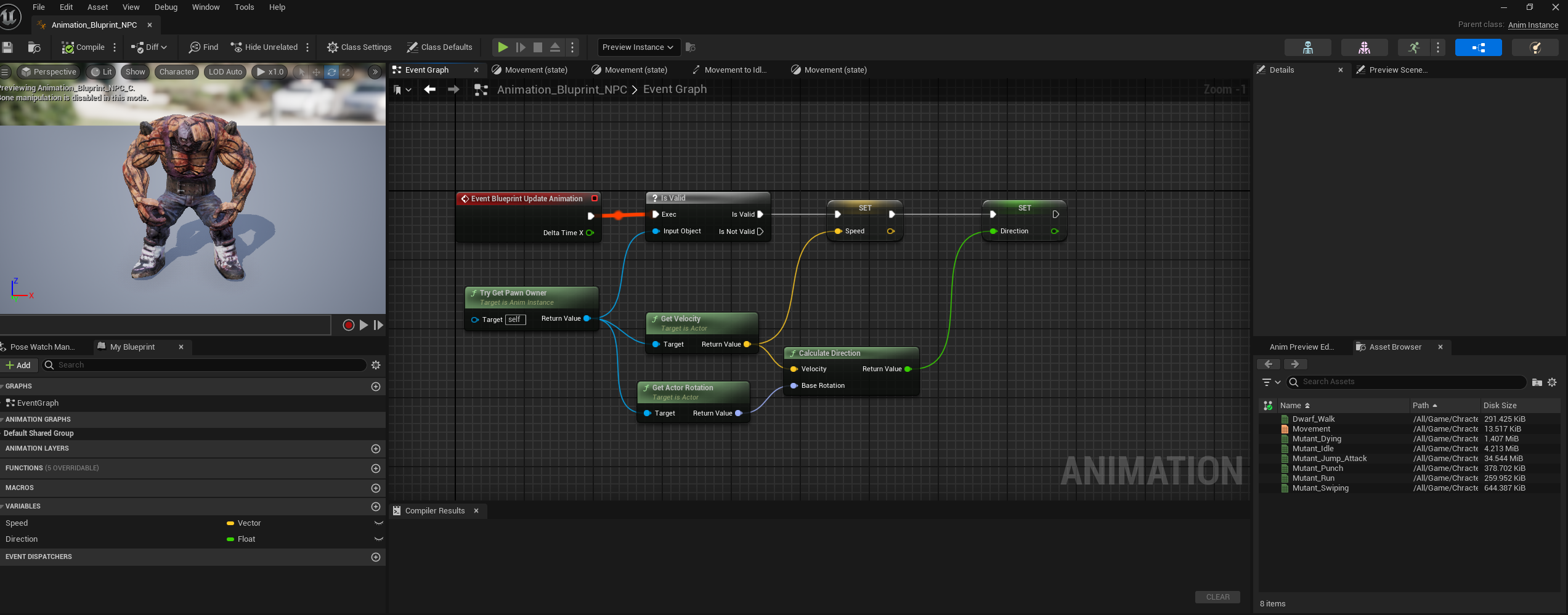
Animation Blueprint
Drives character animation states based on movement speed and direction. Controls transitions between idle, walk, and combat animations using a blend graph.
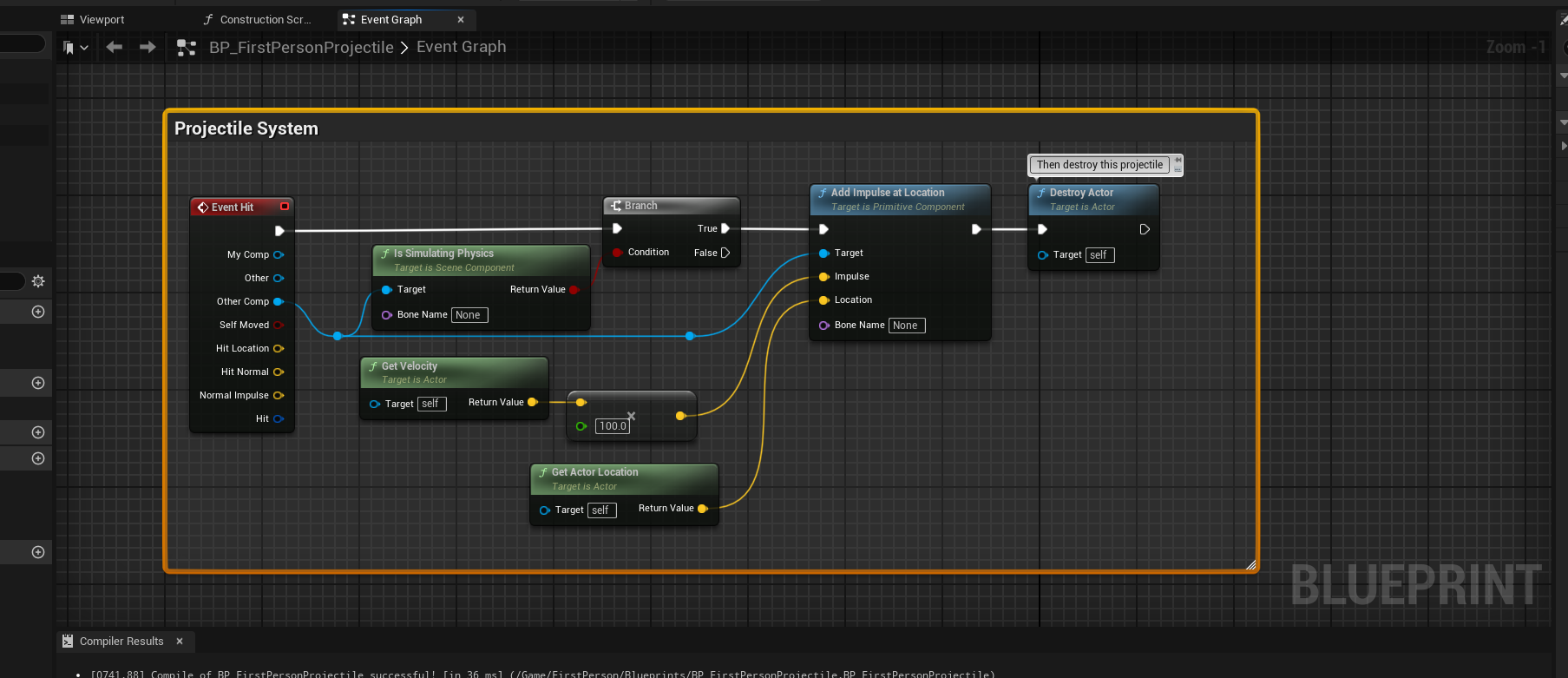
Projectile System
Handles projectile hit detection, physics impulse on impact, and actor destruction — forming the core of the game's combat feel.
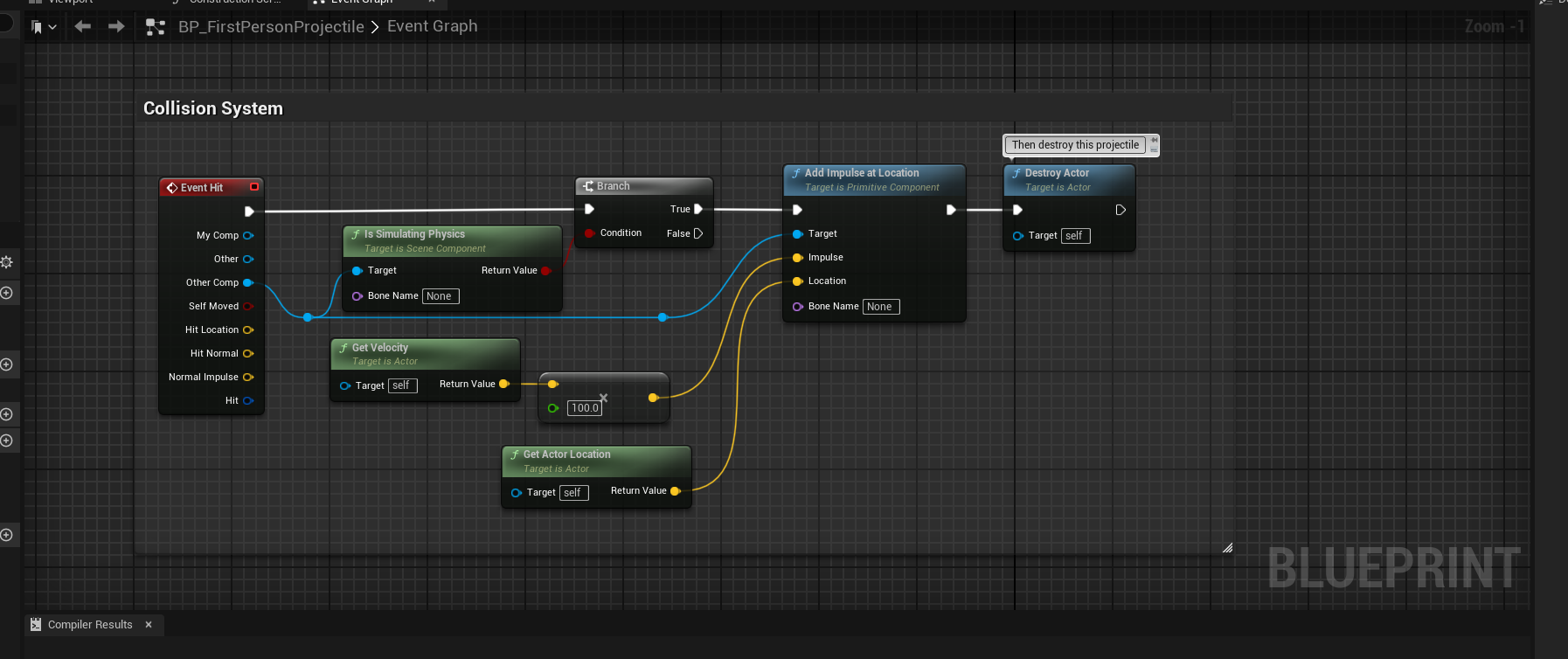
Collision System
Manages physics-based collision responses — handles impulse application and object and actor destruction on hit events.
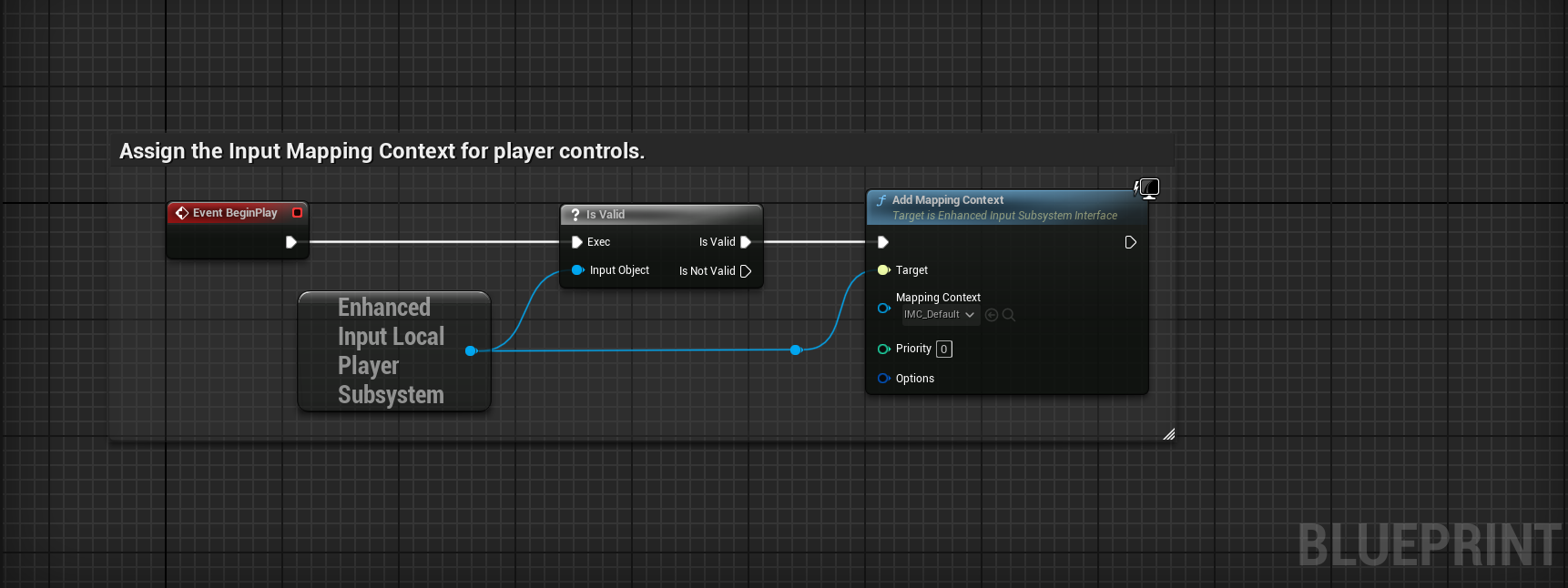
Enhanced Input Mapping
Sets up UE5's Enhanced Input system via the Local Player Subsystem — binding actions to the player controller for responsive, configurable controls.